
Walk into almost any bathroom showroom in New Jersey, and you will find homeowners doing the same thing. They will be staring at a vanity they love, then pulling out their phone to check the photo of their bathroom they took three weeks ago and then staring at the vanity again.
The math never quite works in their head until they are standing there holding a tape measure they forgot to bring. Picking the right bathroom vanity size is one of the trickier parts of a bathroom renovation. But. Getting it wrong is an expensive mistake to live with for the next decade or longer.
This guide breaks down exactly how to size a vanity for your bathroom, what dimensions actually matter, and how New Jersey homeowners in particular can make smarter choices given the mix of older homes, tight layouts, and modern tastes that define renovation projects across the state.
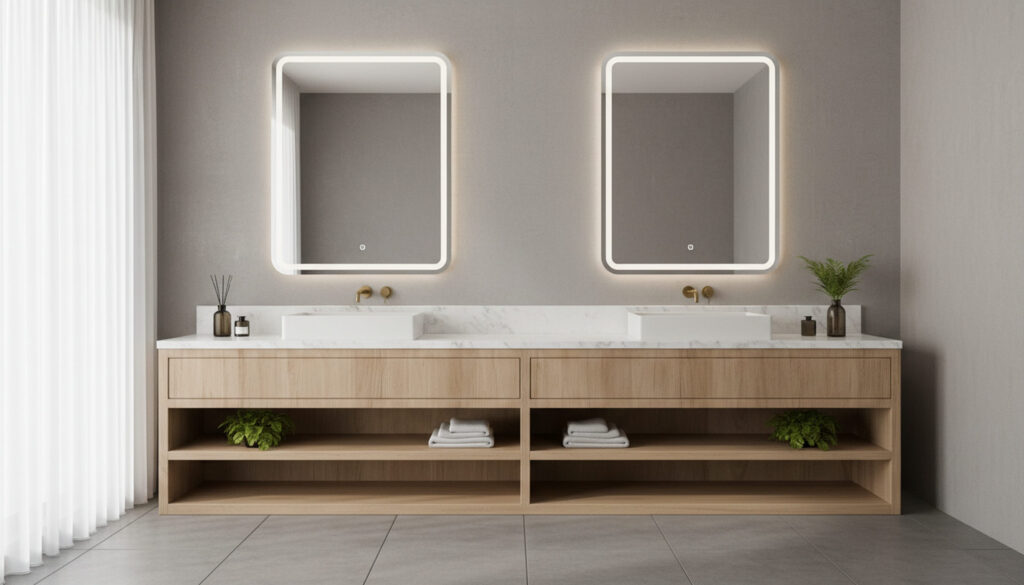
Choose the Right Bathroom Vanity For Your Style
Why Size Is the First Decision, Not the Last?
Most people pick a style first. They fall in love with a floating walnut cabinet or a white shaker-door finish that they saw online. Then they try to make the measurements work around it. This backward thinking causes more renovation regrets than almost anything else in a bathroom project.
Size has to come first. A vanity that is two inches too wide forces you to remove a door trim. One that is three inches too narrow leaves an awkward gap against the wall that collects dust and looks unfinished for years. The aesthetic choices, the finish, the hardware, and the countertop material, all of that is secondary to getting the fit right.
How to Measure Your Bathroom Before You Shop?
Grab a tape measure and a notepad. This takes about 15 minutes and saves you from a very expensive return.
Measure the width of the wall where the vanity will sit. Go wall to wall and write that number down. That is your absolute maximum. In practice, you want the vanity to be at least 2 to 3 inches narrower than the total wall width to leave breathing room on each side and account for any wall irregularities or baseboards.
Measure the depth from the front wall toward the room. Standard vanity depth is between 21 and 24 inches. The question is whether anything gets in the way of that depth. A door that swings open toward the vanity, a toilet that sits close to the side, a window directly behind where the vanity will go, all of these can shorten how deep your cabinet can actually be. Check door swing clearance specifically because this is one of the most commonly missed measurements.
Measure the height from the floor to the top of your current countertop. You can also measure up to the bottom of a mirror or medicine cabinet if it is fixed on the wall. A standard bathroom vanity is usually 32 to 36 inches tall. A comfort-height vanity is a bit taller at about 35 to 36 inches. Many people prefer it because it is easier to use without bending too much. If you are using a vessel sink that sits on top of the counter, choose a shorter vanity base around 30 to 32 inches. This keeps the total sink height comfortable to use.
Standard Vanity Widths and What They Work For
Single sink vanities usually come in sizes from 24 to 48 inches wide.
- 24 inches: Best for small powder rooms or compact guest bathrooms where space is very limited
- 30 to 36 inches: Fits most standard bathrooms and gives a good balance of sink space and counter space
- 48 inches: Larger and more comfortable, with extra storage and counter space for a medium-sized main bathroom
Double sink vanities start around 48 inches and generally run up to 72 inches or more. The 60-inch double vanity is probably the most popular size for master bathrooms in New Jersey suburban homes. It fits two sinks comfortably, gives each person their own counter zone, and does not overwhelm a room. A 72-inch double vanity is more suited to a spacious primary bath where there is genuine room to spread out.
If you are in an older New Jersey home, built before the 1990s, you may be working with a bathroom that is simply not built for a large vanity. Bathrooms in Cape Cods, split-levels, and older colonials in areas like Westfield, Ridgewood, or Summit were often designed around a single pedestal sink or a compact 24-inch cabinet. Trying to force a 48-inch vanity into one of those spaces usually means rerouting plumbing or moving walls. Sometimes worth it. Often not.
How To Choose the Right Vanity Size for Your Specific Bathroom?
Small bathrooms under 50 square feet work best with a 24 to 30-inch single vanity. Wall-mounted vanities are a good option because they open up floor space and make the room feel larger. They are also easier to clean since there is no base touching the floor.
Medium bathrooms between 50 and 75 square feet usually fit a 36 to 48-inch vanity. A 36-inch single vanity gives enough space for one user with some counter room. A 48-inch double vanity can work for two people, even if the space feels a bit tighter, because it adds daily convenience.
Large bathrooms over 75 square feet are best suited for a 60 to 72-inch double vanity. This size gives each person their own sink area and makes shared use much easier, especially during busy mornings.
Single vs. Double Vanity
The appeal of a double vanity is obvious. Two sinks, two sets of drawers. No waiting. But a double vanity in a bathroom that is too small creates more problems than it solves. You end up with two sinks and no room to stand in front of either of them comfortably.
A single vanity with good storage can still work well for two people in a small bathroom. Deep drawers with pull-out organizers and a mirror cabinet above help keep things organized. Storage access matters more than the number of sinks.
Now, if two adults use the bathroom every day, it is a different story. First, check if there is enough space for a 60-inch or larger vanity without blocking doors or limiting movement. If yes, then a double sink is usually the better choice. It makes busy mornings easier in a way that becomes clear once you start using it.
Final Thoughts
A bathroom renovation depends on the right vanity shape and size. The right one definitely improves movement and makes your daily life easier. You must keep the room balanced. If the vanity is too big, the bathroom feels crowded. If it is too small, the space feels unfinished. Remember! Balance.
Careful measuring and choosing the right size create a bathroom that works well for years. One last thing. There is no single right answer, but there is always a size that fits your space best.If you want someone to take care of this job for you, Chelsea Kitchen and Bath Design is the right choice. Contact our team to start your renovation with confidence.